



About this case study: This narrative explains the nature of corrupt activities relating to high-profile cases, and is produced in the public interest. It relies on the final reports from the Judicial Commission of Inquiry into Allegations of State Capture, Corruption, and Fraud in the Public Sector, including Organs of State (the Zondo Commission), court documents, books, investigative journalism reporting, and other media articles, all in the public domain. The ISS has made all reasonable attempts to report the details accurately. Details for the cases in the Zondo Commission reports are provided up to December 2023. Further updates are in the ‘Recent Case Updates’ section below.
The Story
The South African Broadcasting Corporation (SABC), a state-owned enterprise, was subject to repeated interference from politicians and board members between 2011 and 2017. With Zuma associates at the helm of both the SABC and the Ministry of Communications, the SABC entered into a number of ill-conceived and costly contracts with Gupta-owned media companies, The New Age (TNA) Media and Infinity Media. There also continue to be questions around the dealings between Minister of Communications Faith Muthambi, MultiChoice and Africa News Network 7 (ANN7).
 |
SABC Board of 2010Alleged misconduct: Found by an ad hoc Parliamentary Committee to have failed to both provide proper governance of the SABC and perform their fiduciary duties as a board. Status of accountabilityBoard members were removed from their positions on the board. |
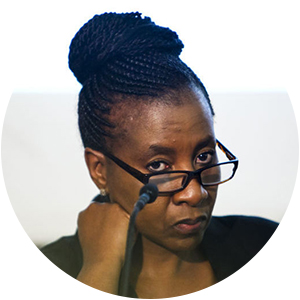 |
Lulama MokhoboSABC Group Chief Executive Officer Alleged misconduct: Signed the irregular contract between the SABC and TNA Media for the TNA breakfast shows. Approved irregular increases to Motsoeneng’s salary. Status of accountabilityNo criminal charges have been brought against her relating to the SABC. The Zondo Commission recommended that law enforcement agencies conduct further investigations with a view to her possible criminal prosecution for contravention of section 38(1)(b) and (c) of the Public Finance Management Act in respect of her role in the conclusion of the agreement between the SABC and TNA for the TNA breakfast shows. |
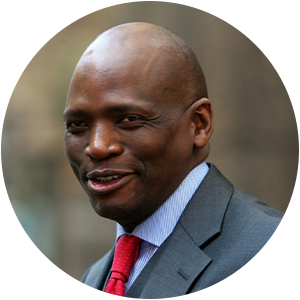 |
Hlaudi MotsoenengSABC COO Alleged misconduct: Misrepresented his academic qualifications to be hired by the SABC. Orchestrated irregular salary increases for himself and others at the SABC. Prohibited certain issues from being broadcast or commented on by the SABC. Enabled Gugu Duda to be irregularly appointed as CFO. Facilitated the dismissal of several SABC staff, costing the SABC millions in settlement claims. Secured himself a R11.5m ‘success fee’ against the policies of the SABC. Status of accountabilityIn 2015, the High Court ordered his appointment as COO be set aside. In 2016, the High Court ordered that he could not work at the SABC in any capacity. Fired in 2017 after an internal disciplinary hearing found him guilty of misconduct. In 2021, the Gauteng High Court found that the R11.5m ‘success fee’ was unlawful and ordered him to pay it back within seven days. After several appeals, the Constitutional Court dismissed his case in September 2024. The Zondo Commission recommended that law enforcement agencies conduct further investigations with a view to his possible criminal prosecution for contravention of section 45(b) and (c) of the Public Finance Management Act in respect of his role in the conclusion of the agreement between the SABC and TNA for the TNA breakfast shows. |
 |
Gugu DudaSABC CFO Alleged misconduct: Appointed to her position through an irregular process in 2012. Committed procurement and financial irregularities. Status of accountabilitySuspended seven months into the job and dismissed in 2014. |
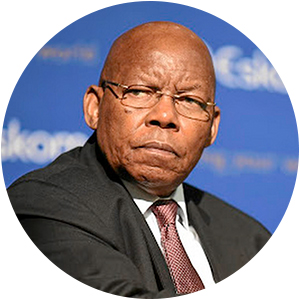 |
Ben NgubaneSABC board chairperson Alleged misconduct: Contrived to protect the irregular appointment of Motsoeneng to various positions within the SABC, including COO. Approved irregular salary increases for Motsoeneng. Chair of the board that was found to have violated its fiduciary duties by the Public Protector and a Parliamentary ad hoc inquiry. Status of accountabilityDied on 12 July 2021. |
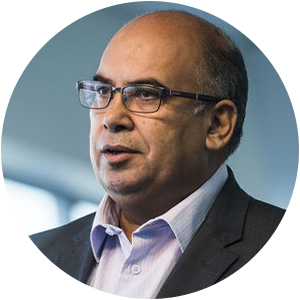 |
Nazeem HowaThe New Age (TNA) Chief Executive Officer Alleged misconduct: Signed the irregular contract between the SABC and TNA Media for the TNA breakfast shows. Orchestrated the sale of archival SABC footage to TNA for less than it was worth and without copyright costs. Status of accountabilityResigned from TNA in 2016 due to ill health. No criminal charges have been brought against him relating to the SABC. |
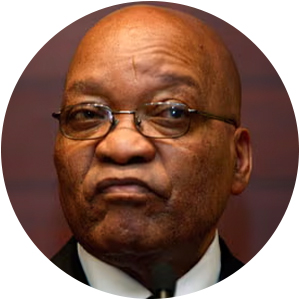 |
Jacob ZumaPresident Alleged misconduct: Acted in breach of the Executive Ethics Code by placing himself in a conflict of interest and abusing his office for his own benefit in relation to TNA and ANN7. Status of accountabilityNo criminal charges have been brought against him relating to the SABC. |
 |
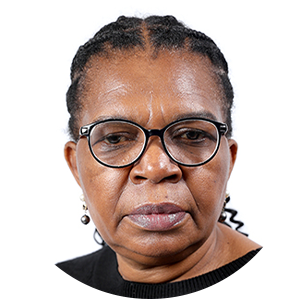
Duduzane ZumaPresident Zuma’s son and Gupta business partner Alleged misconduct: Benefitted financially from the relationship between the Gupta family and Zuma through contracts irregularly awarded to TNA and ANN7 by various state enterprises, particularly the SABC. Status of accountabilityNo criminal charges have been brought against him relating to the SABC. |
 |
Dina PuleMinister of Communications, 2011 – 2013 Alleged misconduct: The Public Protector found that she acted improperly and in violation of the Executive Ethics Code in facilitating Gugu Duda’s appointment as SABC CFO. Status of accountabilitySuspended from Parliament and reprimanded by Parliament’s Joint Committee on Ethics and Member’s Interests. |
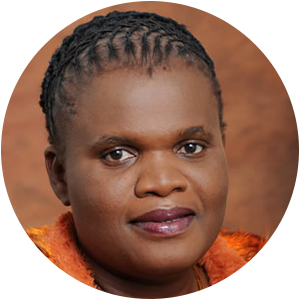 |
Faith Muthambi, 2014 – 2017Minister of Communications Alleged misconduct: Interfered in the SABC board’s decision-making processes in permanently appointing Motsoeneng as SABC COO. Allowed Motsoeneng to make unilateral editorial decisions at the SABC. Sent emails about confidential ministerial policy directly to Tony Gupta or to Gupta associates. Zondo referred to her as a “Gupta Minister”. Status of accountabilityNo criminal charges have been brought against her relating to the SABC. The Western Cape High Court set aside her appointment of Motsoeneng, finding it unlawful and irrational. The Zondo Commission recommended she be referred to the National Prosecuting Authority on charges of contravening the Prevention and Combatting of Corrupt Activities Act. |
InsightISS Analysis
Our key insights on this case
1
The SABC Board was what is known as a ‘compliant’ Board in that it failed to exercise diligence and control over a dominant person, resulting in systemic corporate governance problems. Corporate governance rules are contained in the Companies Act (which is compulsory) and the King Code (which is voluntary). These rules lay down serious duties for people who serve as directors on company Boards.
2
3
4
Lessons for prevention and early intervention
1
2
3
4
5
Story 1Political and Board Interference
In November 2011, Hlaudi Motsoeneng was appointed acting Chief Operations Officer (COO) of the SABC. The Public Protector reported that SABC Board Chairperson Dr Ben Ngubane ordered that the qualification requirements for the appointment of the COO be altered to remove academic qualifications, as had previously been advertised, in order to suit Motsoeneng’s CV. This was necessary because Motsoeneng was employed at the SABC in 1995 after falsely stating in his application form that he had a matric certificate from Metsimantsho High School. Despite this, Motsoeneng had been promoted to Executive Producer of Current Affairs in 2003 and appointed general manager responsible for board and stakeholder relations in the office of the Group Chief Executive Officer (GCEO) in 2011. Motsoeneng’s Human Resources file disappeared amid allegations that he had falsified his qualifications.
In early 2012, the SABC advertised to fill the position of Chief Financial Officer (CFO). On 31 January, after a legitimate selection process, the SABC board recommended to the Minister of Communications, Dina Pule, that Msulwa Daca be appointed. Pule rejected the board’s recommendation and ensured, with the help of Themba Phiri (acting Deputy Director-General at the Department of Communications) and Motsoeneng, that Gugu Duda was considered for the position. Duda was interviewed on 7 February, without applying for the position and long after the recruitment and selection process had been closed. She was appointed CFO later that month. Duda was suspended seven months later in connection with procurement and financial irregularities. She was dismissed from the SABC in March 2014 after confirmation by the Commission for Conciliation, Mediation and Arbitration (CCMA).
In her 2014 report on the SABC, ‘When governance and ethics fail’, the Public Protector made the following findings: the SABC Board violated its own policies in allowing Motsoeneng to stay as acting COO for longer than three months without the requisite board resolution and in paying him in excess of the capped salary allowance; that Mokhobo and Ngubane’s approvals of Motsoeneng’s salary increases were irregular and constituted improper conduct, abuse of power and maladministration; that Duda’s appointment was grossly irregular; and that Pule acted improperly and in violation of the Executive Ethics Code in facilitating Duda’s appointment.
On 25 May 2014, Zuma appointed Faith Muthambi as Minister of Communications. Soon after her appointment, Muthambi interfered in the business of the board by pressuring them to permanently appoint Motsoeneng as COO.
Between July and August 2014, Muthambi sent a series of emails – either directly to Tony Gupta or to Ashu Chawla (Sahara Computers CEO and Gupta associate), who in turn forwarded the email to Tony Gupta and Duduzane Zuma (President Zuma’s son). These were revealed in a massive data leak of emails and documents related to the Guptas in 2017, known as the #GuptaLeaks. The emails contained confidential content relating to executive policy and matters in the scope of her ministerial powers. The Zondo Commission found that:
There is no reasonable explanation for communications of this nature between a Minister and members of the Gupta group who control a television station subject to her regulatory jurisdiction … The email correspondence suggests either: that the transfer of powers to her national portfolio was influenced and vetted by the Guptas; or that she used their relationship with the Guptas to influence the manner in which President Zuma transferred powers to her portfolio.
The SABC’s Memorandum of Incorporation (MOI) signed by Muthambi in October 2014 reportedly eroded the powers and duties of the Board as per the Broadcasting Act and empowered the Minister to become more involved in the SABC’s operational matters.
The Democratic Alliance went to court to seek a review of Muthambi’s decision to permanently appoint Motsoeneng. In November 2015, after a lengthy legal battle, Western Cape High Court Judge Dennis Davis set aside Motsoeneng’s appointment as unlawful and irrational in the face of the Public Protector’s findings against him of abuse of power, fraud and maladministration. In May 2016, the Western Cape High Court dismissed an application for leave to appeal the ruling. The SABC sought leave to appeal this judgement in the Supreme Court of Appeal, which dismissed the case in September 2016.
Meanwhile, the SABC appointed Motsoeneng as Group Executive of Corporate Affairs after an internal disciplinary process dismissed all charges against him—a process that the court later found to be procedurally flawed.
In September 2016, the SABC’s governance and nominations committee paid Motsoeneng a once-off R11.5m ‘success fee’ for securing a deal with MultiChoice. The payment was not approved by the SABC board, and there was no policy for paying out success fees at the time.
In October 2016, several board members resigned in protest at the SABC’s dysfunction and Motsoeneng’s reappointment, leaving it with only four members (nine members were required to be quorate). Several board members had either resigned or been removed over the preceding three years.
In December 2016, Western Cape High Court Judge Owen Rogers ruled that Motsoeneng could not work at the SABC in any capacity unless the Public Protector’s report was set aside or a new internal disciplinary hearing cleared him of wrongdoing.
Acting on widespread concerns about dysfunctionality within the SABC, Parliament conducted an inquiry into the Board’s ability to provide proper oversight and governance between November 2016 and February 2017. During this time, the remaining board members, including the chair, Mbulaheni Maguvhe, resigned. The final report of the Ad Hoc Committee on the SABC Board Inquiry into the Fitness of the SABC Board found that there had been a lapse of governance and the board had failed to discharge its fiduciary responsibilities. The Committee recommended the formal dissolution of the board and the institution of an interim board while a permanent board was appointed.
The Committee also found that the MOI signed by the Minister gave her ‘undue access to the SABC’s administration, thereby compromising the SABC’s independence. It further concentrates certain Board powers in the hands of the executive management.’ It also found that Muthambi had ‘interfered in some of the Board’s decision-making and processes and had irregularly amended the MOI to further centralise power in the Minister.’ The report concluded that the Minister had been incompetent in carrying out her duties as the shareholder representative and recommended that the President should consider whether she was suitable for the role. On 31 March 2017, Muthambi was made the Minister of Public Service and Administration in a major cabinet reshuffle by President Zuma.
In April 2017, while he was suspended, Motsoeneng criticised SABC board members during a media briefing. In July 2017, Motsoeneng was fired from the SABC after a disciplinary inquiry found him guilty of misconduct in relation to his media comments.
In terms of Proclamations R29 of 2017 and R19 of 2018, the Special Investigating Unit (SIU) was authorised to investigate ‘maladministration in the affairs of the SABC and any losses or prejudice suffered by the SABC or the State as a result of such maladministration’ in relation to, among other things, ‘the irregular appointment and promotion of staff [and] the payment of salaries, increases, bonuses and other forms of remuneration that were not due, owing or payable or were made in a manner that was contrary to applicable (i) legislation; or (ii) manuals, policies, procedures, directives, instructions or practices of or applicable to the SABC’.
In December 2021, the Gauteng High Court found that the R11.5m ‘success fee’ paid to Motsoeneng was unlawful and ordered him to pay it back within seven days. Motsoeneng’s attempt to appeal this ruling was dismissed in July 2022, with the court ruling that there was no reasonable prospect of success. In August 2022, Motsoeneng petitioned the Supreme Court of Appeal for leave to appeal, but this was also dismissed in January 2023.
In May 2024, the Supreme Court of Appeal rejected another bid by Motsoeneng for them to reconsider the refusal of his petition to appeal the ruling to repay the R11.5m ‘success fee’. In September 2024, the Constitutional Court declined to hear Motsoeneng’s appeal against the Supreme Court of Appeal’s decision not to hear his appeal. The SIU announced that it has already recovered R6.5m from Motsoeneng’s pension benefits. It stated that the Constitutional Court’s ruling was a positive step, clearing the way for the SIU to pursue the outstanding amount from Motsoeneng, which amounts to R18m with interest.
Story 2Disregarding Policy
Motsoeneng also unilaterally orchestrated salary increases for certain SABC staff – including Sully Motsweni, Thobekile Khumalo, Hannes Du Buisson and various freelancers – without following the SABC Personnel Regulations. As a result, the SABC’s salary bill increased by R29m.
During his tenure as acting COO, Motsoeneng allegedly had a hand in dismissing several senior SABC staff – in all the cases, he had direct involvement, advised the board or had a history of conflict with the person involved. All 14 suspensions and terminations were successfully challenged, with procedural and substantive injustices confirmed in findings of the CCMA and the courts. As a result, the SABC paid out millions of Rands in settlements.
Motsoeneng also reportedly changed supply chain management reporting lines from the CFO to the COO. This meant that procurement decisions could be taken by the COO or his office and that suppliers could conclude contracts directly with Motsoeneng, in contravention of the SABC’s supply chain processes. External service providers were sometimes appointed even though the same service was available internally. As chair of the Operations Committee, Motsoeneng approved a contract with Vision View and unlawfully cancelled the tender that the Bid Adjudications Committee had approved and recommended to the Group Executive Committee, resulting in an irregular and unauthorised deviation process.
In 2013, the senior management announced that the SABC would implement a policy of reporting 70% positive news and 30% negative news, forbidding certain events to be broadcast or commented on. The Ad Hoc Committee on the SABC Board Inquiry into the Fitness of the SABC Board heard testimony that this policy ‘affected unbiased reporting and contravened the most basic of journalistic ethics.’
Numerous witnesses at the Zondo Commission testified that Motsoeneng interfered in editorial decisions at the SABC. Most news organisations deliberately separate editorial decisions made by news editors from management, in order to protect news decisions from commercial or political influence. It was reported that ‘Minister Muthambi handed the reign over SABC editorials to Mr Motsoeneng … and allowed him to act above the law.’
Story 3Infinity Media And The New Age Media
Rajesh Sundaram, the former editor of ANN7, gave evidence at the Zondo Commission that was found to be reliable and credible. Sundaram testified that Zuma was involved in the conception, establishment and running of the news media outlets, to the extent that Zuma helped to name the TV station, was interested in personnel matters and had a hands-on approach to editorial strategy.
Sundaram also testified that he and other Indian nationals were brought to South Africa to work for ANN7 on irregularly processed visas. The Zondo Commission found that Zuma had indirectly enabled the Guptas to contravene South Africa’s visa and labour laws by facilitating relationships between the Guptas and the relevant government authorities. An investigation conducted by the Department of Home Affairs found that four Indian national ANN7 employees had violated the conditions of their permits and had been ordered to leave the country.
In relation to Infinity Media and the formation of ANN7, the Zondo Commission found that the Gupta family used their close relationship with Zuma to facilitate and extend their business interests from India to South Africa. Through this relationship, the Guptas’ media companies were awarded contracts with various state-owned entities – in particular the SABC – to the detriment of other potential competitors who operated in the same media space. For example, The New Age newspaper secured contracts with provincial government departments and state-owned enterprises, such as Eskom, South African Airways (SAA), the Government Communication and Information Services (GCIS) and the SABC.
Between 2012 and 2014, Eskom paid TNA almost R60m in advertising and sponsorship. At SAA, Vuyisile Kona approved an increase in The New Age newspaper subscriptions from 3 000 to 7 000 per day, amounting to an extra R2.4m spent on TNA in 2012. Under Director General Mzwanele Manyi, the GCIS paid TNA nearly R6m in one month in March 2012, even though The New Age had no established readership or certified circulation figures. In the 2013-2014 financial year, GCIS paid R9.5m to TNA – the following year, GCIS paid them close to R10m. The SABC paid R930 873 for The New Age newspaper to be delivered to the SABC on a weekly basis. Mokhobo testified at the Zondo Commission that no contract existed relating to the newspapers or associated payment.
In August 2017, ANN7 and The New Age were sold to Mzwanele Manyi. ANN7 shut down in 2018 after failing to renew its contract with DStv. The New Age published its last edition on 29 June 2018.
Story 4The TNA Breakfast Briefings
When Mokhobo joined the SABC as Group CEO in February 2012, she was concerned that the SABC and TNA were jointly broadcasting breakfast briefings without a contract.
To formalise the arrangement, Thabang Mathibe, the acting SABC Legal Service Group Executive, entered into negotiations with TNA and drafted a contract, which was signed by Mokhobo and Nazeem Howa TNA Media’s CEO. In essence, the contract allowed TNA to host breakfast shows twice a month that would be broadcast on SABC2’s Morning Live programme.
Sundaram testified at the Zondo Commission that the breakfast show featured key national and provincial Ministers and officials, and that these Ministers and their respective departments paid the bills incurred by TNA. As a result, TNA earned R1.8m per show.
The SABC was unaware that TNA was receiving revenue from the government departments and state-owned enterprises featured in the breakfast shows, at the same time that the SABC was absorbing the costs of facilitating these shows, including the crew and personnel involved in scripting, producing, editing and outside broadcasting each event. Over R4m was spent by the SABC on these outside broadcasts between April 2011 and March 2017. According to testimony at the Zondo Commission, the SABC was never paid by, nor did it invoice, TNA for any of the breakfast shows or other outside broadcasting services that it rendered to TNA. The SABC both lost revenue (by “giving away” airtime on a popular slot during prime time viewing) and incurred unauthorised expenditure as a result of the manner in which the contract was drafted and implemented. The breakfast shows also provided free advertising for TNA Media, for its own benefit as well as for members of the Gupta family.
The contract between the SABC and TNA was extended well beyond the initial 24 months agreed to in writing and continued until 2017 without any addendum to the original contract. The number of broadcast events also increased over time. The Zondo Commission found that this contract was irregular and went against the public procurement processes sanctioned by the SABC and the National Treasury.
The Zondo Commission concluded that:
The costs incurred by the SABC for the TNA broadcasts, coupled with the provision of the relevant services to TNA by the SABC, in the amount of approximately R4.3m, between 01 April 2011 and 31 March 2017, should be recovered from any of the assets belonging to TNA or any assets held by the members of the Gupta Family. It is further recommended that the SABC should consider instituting civil proceedings against TNA Media or any of its Directors and recover all the costs incurred by the SABC including disgorgement of profits made by TNA Media in relation to the breakfast shows.
In terms of Proclamations R29 of 2017 and R19 of 2018, the SIU was authorised to investigate ‘maladministration in the affairs of the SABC and any losses or prejudice suffered by the SABC or the State as a result of such maladministration’ in relation to, among other things, ‘business transactions that were concluded by or on behalf of the SABC and which were not viable or to the advantage of the SABC’.
Story 5The Sale of SABC Archival Content To ANN7
Josias Scott, who was responsible for overseeing the sale of archival footage from the SABC to external purchasers, testified at the Zondo Commission that he met with TNA’s Howa, who wanted to buy 2 000 minutes of archival footage.
Scott met with Jimi Matthews, the Chief Executive of News at the SABC, to discuss Howa’s request, including the price of the content. Matthews was authorised to deviate from SABC’s price guide and charged ANN7 R70 per minute of archival footage as opposed to the normal price of R100 per minute. 1 982 minutes of archival content was copied from the SABC, but ANN7 was invoiced for the original 2 000 minutes agreed upon between SABC and ANN7. Infinity Media paid the SABC a total of R405 840 (R159 600 for the 2 000 minutes; R123 102 and R91 200 for a further 27 minutes and 20 minutes; and R31 920 for ANN7’s declaration).
Sundaram testified that the SABC had basically “given” 100 hours of archived video footage worth millions to TNA. Howa told Sundaram that no one questioned the deal because of the close relationship between the Guptas and Zuma.
It is usual practice for a media company purchasing archival footage to inform the SABC if they use or broadcast any of it, and they are invoiced a copyright fee accordingly. However, Scott testified that there was no real way to verify how much footage clients used for copyright purposes. Howa reportedly told Sundaram that, although ANN7 had agreed to pay the SABC every time the footage was played, the SABC had no way to monitor the use of such footage.
Nakedi Ramoshaba, a senior archivist at ANN7, told the Zondo Commission that she requested the licences and copyright documents relating to the SABC content sold to ANN7 because there was no information on which she could base her cataloguing. She testified that she was silenced when she enquired about such information.
ANN7 used the SABC archival content and when Afro Media bought ANN7, they continued to use the SABC footage.
In terms of Proclamations R29 of 2017 and R19 of 2018, the SIU was authorised to investigate ‘maladministration in the affairs of the SABC and any losses or prejudice suffered by the SABC or the State as a result of such maladministration’ in relation to, among other things, ‘the mismanagement of the finances, rights, assets or liabilities of the SABC [and] the selling of assets or rights which were owned by the SABC which was not to the advantage of the SABC.’
Story 6SABC and Multichoice
MultiChoice is a South African, Johannesburg Stock Exchange-listed entertainment and broadcasting company that operates DStv, among others. Between the early 1990s and 2018, it was owned by Naspers, a South African multinational internet, technology and multimedia holding company.
A proposed new 24-hour SABC news channel, which was supposed to launch on DStv, was delayed several times (April 2011, October 2011, April 2012 and September 2012) and eventually failed to materialise. This meant that DStv had a channel available at the same time that ANN7 was looking for a home – without a channel on DStv, it could not exist. In February 2013, it was announced that ANN7 would air on DStv from August 2013.
At the time, MultiChoice CEO Imtiaz Patel stated that MultiChoice was providing space for ANN7 but not paying for the channel. However, MultiChoice paid ANN7 a once-off amount of R25m, as well as paying them R50m per year between 2013 and 2015, which was increased to R141m per year in September 2015. Smaller channels that do not attract large audiences (ANN7 had fewer than 10 000 viewers per day in 2014 and 2015) usually pay MultiChoice to host them, not the other way around. MultiChoice has refuted the claim that these payments were abnormal, saying that ‘is common practice to pay for content, including local news channels.’
Ongoing allegations and questions have centred on the timing of these payments and what benefits MultiChoice derived from them.
To understand these allegations and questions, it is necessary to backtrack to 2005, when South Africa began the migration from analogue to digital television (TV). This meant that anyone with a TV would need a decoder (or set-top box) to receive the new digital signal. With an estimated 5 million households unable to afford set-top boxes, the government decided to subsidise the set-top boxes and began a consultation process to determine what type of set-top box would be right for the country’s needs.
Three options were proposed:
- Decryption or simple control: a basic on/off switch for preventing theft
- Encryption: scrambles the broadcast signal while in transmission and unscrambles it upon arrival in the set-top box, to protect against piracy
- Conditional access (CA): has encryption and allows pay-TV broadcasters to control who has access to their broadcasts (using smartcard hardware or software).
Typically, encryption and CA are the methods used to secure pay-TV subscription services for commercial gain.
Two opposing camps emerged from this consultation process:
- Those advocating for decryption or simple control (including MultiChoice), who argued that adding encryption or CA to set-top boxes is expensive, technologically complex and a temporary measure while the technology is being developed to incorporate digital decoders into TV sets. MultiChoice also argued that if free-to-air broadcasters like e.tv had CA, then the decoder would allow them to offer pay-TV services while being subsidised by the government – because the government had provided the decoders and to manufacture their own decoders would come at a significant cost.
- Those advocating for encryption and CA (including e.tv, in a reversal of their original stance) argued that simple control limits the types of High-Definition premium content that free-to-air broadcasters can buy because TV producers want their content encrypted to prevent piracy, and that competition was needed in the pay-TV space.
ANC policy generally supported encryption and CA but three successive communication ministers failed to create coherent policy and regulation for the migration process. MultiChoice lobbied hard against encryption and CA as detrimental to its commercial interests.
In 2013, Minister of Communications Yunis Carrim developed a policy that stated set-top boxes must have encryption with CA. All broadcasters (except for e.tv) made submissions to the Minister arguing that introducing encryption was an expensive mistake. During the Zondo Commission, Carrim alleged that while he was Minister of Communications from 2013 to 2014, Naspers CEO Koos Bekker pressured him to support MultiChoice’s position on decryption.
In July 2013, Multichoice and the SABC signed an agreement that, among other things, bound the SABC to decryption for the duration of the agreement. This was in contrast to the policy articulated by the government, but in the commercial interests of MultiChoice. Witnesses at the Zondo Commission disagreed over the circumstances under which the SABC signed the agreement, but there was consensus that the process was subject to ‘internal irregularities’.
Muthambi was appointed Minister of Communications in May 2014 and #GuptaLeaks revealed email communication from Clarissa Mack, MultiChoice’s Group Executive for Regulatory and Policy Affairs, to Muthambi in July 2014. In these emails, Mack specified how decision-making powers should be divided between Muthambi’s Ministry of Communications and Siyabonga Cwele’s Ministry of Telecommunications and Postal Service (in the aftermath of Zuma splitting the communications portfolio into two departments). She also made it clear that MultiChoice wanted key powers that were guaranteed under the Electronic Communications Act to be transferred back to Muthambi. Muthambi sent these emails, and other policy documents shared by Mack, to Ashu Chawla, a known Gupta associate.
In March 2015, Muthambi issued a revised policy document in favour of decryption or simple control. Six months later, MultiChoice increased its payments to ANN7 from R50m to R141m per year.
The agreement between the SABC and MultiChoice has been the subject of many legal proceedings, including the Zondo Commission, Competition Commission, Competition Tribunal, Supreme Court of Appeal and the Constitutional Court.
Allegations of fraud and corruption by MultiChoice have not been proven in court. An internal MultiChoice investigation found that ‘No correlation was found between payments made to ANN7 and the MultiChoice lobbying effort’, while the Zondo Commission report states that ‘there is no evidence on which a finding can be made that MultiChoice’s lobbying in this regard included acts of fraud and/or corruption.’
However, in 2018, the Competition Commission found that the agreement between the SABC and MultiChoice ‘influenced’ government policy and ‘the strategic direction of the SABC’. The agreement also protected MultiChoice’s dominance of the broadcast industry and prevented competition by new entrants. MultiChoice is appealing this ruling.
In January 2018, MultiChoice announced that it would no longer be hosting ANN7 on DStv as of August 2018. This followed an internal investigation into its relationship with ANN7.
MultiChoice conceded that the investigation found that MultiChoice had not carried out adequate ‘due diligence’ on the owners of ANN7 and had not acted swiftly enough when it became clear they were a reputational risk.
RecentCase Updates
Latest developments from news sources
- August 2024: A court application by the SABC and SIU is seeking permission to serve the Gupta brothers with a notice of motion via social media platforms, such as Facebook, WhatsApp and Instagram, as they have evaded traditional legal channels since 2018. The SABC and SIU are aiming to recover costs and profits worth R4.2 million, made by TNA Media at the expense of the SABC, from the Gupta family’s assets.
- 18 October 2024: Proclamation 206 of 2024 authorises SIU to investigate serious maladministration within the SABC regarding the agreement with TNA Media on the New Age Breakfast Briefings, as well as serious maladministration within Eskom, Transnet, PetroSA, SAA and the Department of Human Settlements regarding the expenditure of public money on the New Age Breakfast Briefings. The SIU is also authorised to investigate any irregular, improper or unlawful conduct by the employees or officials of these state institutions or TNA Media in relation to the above allegations.