


About this case study: This narrative explains the nature of corrupt activities relating to high-profile cases, and is produced in the public interest. It relies on the final reports from the Judicial Commission of Inquiry into Allegations of State Capture, Corruption, and Fraud in the Public Sector, including Organs of State (the Zondo Commission), court documents, books, investigative journalism reporting, and other media articles, all in the public domain. The ISS has made all reasonable attempts to report the details accurately. Details for the cases in the Zondo Commission reports are provided up to December 2023. Further updates are in the ‘Recent Case Updates’ section below.
The Story
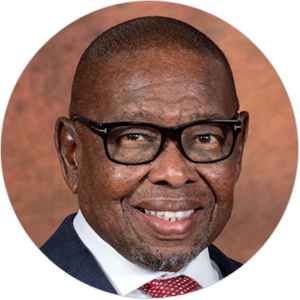 |
Blade NzimandeMinister of Higher Education, Science and Technology Alleged misconduct: Appointed Nongogo as CEO of NSFAS despite allegations of irregular and wasteful expenditure when Nongogo was CEO of the Services Sector Education and Training Authority. Accused by OUTA of taking kickbacks from NSFAS service providers. Status of accountabilityNo criminal charges have been brought against him in relation to NSFAS. Cleared of wrongdoing by the South African Communist Party’s central ethics commission in relation to OUTA’s allegations that he received kickbacks from NSFAS service providers. |
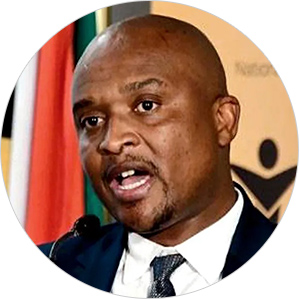 |
Andile NongogoNSFAS CEO Alleged misconduct: Revised and reduced NSFAS’ original direct payment tender specifications, allowing fintech companies to bid. Actively participated in the tender process against NSFAS supply chain management policies. Appointed Chirwa to the BEC against NSFAS policies. Reportedly connected with two of the companies awarded the direct payment tender, Coinvest and eZaga Holdings. Participated in the evaluation of the student accommodation bids against NSFAS policy. Status of accountabilityNo criminal charges have been brought against him in relation to NSFAS. Fired by the board. |
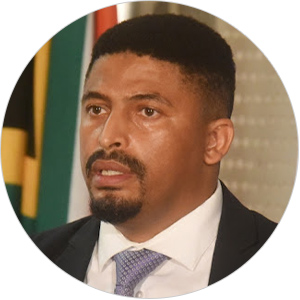 |
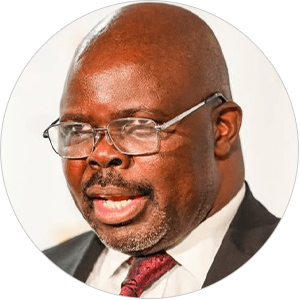
Masile RamorwesiNSFAS CFO Alleged misconduct: As CFO, chaired the BEC instead of the BAC (in contravention of the National Treasury’s Code of Conduct for BACs). Made irregular recommendations to the BEC on how to evaluate the bids. Contravened NSFAS supply chain management and procurement policies. Status of accountabilityNo criminal charges have been brought against him relating to NSFAS. Resigned from NSFAS while facing seven internal charges, including approving processes without following supply chain management rules, gross dishonesty and breach of fiduciary duty. All internal disciplinary processes against him were discontinued. |
 |
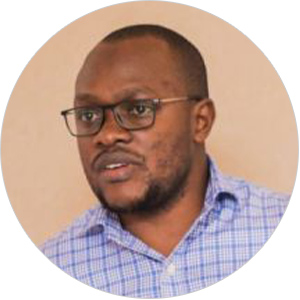
Ernest KhosaNSFAS board chairperson Alleged misconduct: Discussed the details of confidential NSFAS board meetings with two non-board members and did not disclose these discussions to the board. Accused by OUTA of taking bribes from NSFAS service providers. Status of accountabilityCleared of OUTA’s allegations in an investigation report by TGR Attorneys commissioned by the NSFAS board. TGR recommended he be reprimanded for his actions in discussing NSFAS board business and that the board should consider sending Khosa to board leadership training – these recommendations are not applicable because the NSFAS board was dissolved. |
 |
Dr George ChirwaBusiness Executive Alleged misconduct: Participated in the BEC in alleged breach of NSFAS’ supply chain policies in place at the time. Advised on the direct payment tender process despite being connected to one of the service providers awarded the tender. Status of accountabilityNo criminal charges have been brought against him in relation to NSFAS. |
InsightISS Analysis
Our key insights on this case
1
- One powerful, unaccountable individual dominates a sector.
- The same politically connected people and companies repeatedly benefit from several schemes.
- This network monopolises opportunities for corruption in that sector.
- Effective legal or political constraints are absent.
2
3
4
Lessons for prevention and early intervention
1
2
3
4
5
Story 1Direct student payment system
NSFAS implemented a direct student payment system in 2022. Various investigations later found that the tender process was corrupt, and the irregular procurement process implicated the NSFAS CEO, Andile Nongogo, and the NSFAS CFO, Masile Ramorwesi.
2018 |
In August, the NSFAS board was dissolved after corruption was uncovered in the voucher system and there were delays in payments to students. Maladministration within NSFAS resulted in irregular expenditure of R7.5bn in 2017 and 2018. This involved over 40 000 students benefitting irregularly from financial aid that they were not entitled to, with funding amounting to over R5bn allocated to undeserving students. The higher institutions involved were unable to identify the fraudulent applications. The irregularities were the result of a litany of problems, including irregular records in the system, which meant the wrong payments were made to the wrong students at the wrong times; a failure of critical governance processes resulted in a climate of non-compliance to statutory reporting being the norm; decentralised and disaggregated decision-making processes; and the failure of ICT systems, which were not fit-for-purpose in the first place. NSFAS was placed under administration, with Randall Carolissen appointed as the administrator by Minister of Higher Education, Science and Technology Naledi Pandor. |
2019 |
In May, Blade Nzimande was appointed the Minister of Higher Education, Science and Technology by President Cyril Ramaphosa. |
2020 |
In March, Carolissen made a presentation to Parliament’s Select Committee on Education and Technology, Sports, Arts and Culture in which he reported that several NSFAS officials found to be involved in fraud and corruption had been arrested and dismissed. Other cases involving fraud and corruption had been handed over to the Special Investigating Unit (SIU) for further investigations.
In July, Carolissen initiated a process to appoint a service provider to pay students directly. A bid was advertised but deemed non-responsive and cancelled. In November, a second bid was advertised. The tender had 17 mandatory requirements for bidders to meet, including possession of a banking licence. First National Bank (FNB) was selected as the preferred bidder. Carolissen’s term as administrator ended in December amid allegations that he had made a series of irregular appointments at NSFAS. He strenuously denied these allegations. NSFAS achieved an unqualified audit for the first time in three years. With Carolissen’s departure, Nzimande appointed Andile Nongogo as CEO of NSFAS on the recommendation of the NSFAS board. Nongogo was previously CEO of the Services Sector Education and Training Authority (SSETA), where he reportedly signed off on highly inflated invoices. For example, SSETA paid R93 579 for 20 branded T-shirts, R264 340 for six branded umbrellas and R58 800 for 60 coasters. Also in December, Ernest Khosa was appointed chairperson of the NSFAS board. In 2005, Khosa had resigned as CEO of the Mpumalanga Economic Empowerment Corporation (MEEC), days before a forensic report of his conduct was released by auditing firm PwC. The report showed that he had facilitated irregular multimillion-rand loans to MEEC managers and companies while taking a portion to pay politically connected individuals. Although these allegations were investigated by the Directorate of Special Operations (known as the Scorpions), this special unit of the National Prosecuting Authority was closed down shortly afterwards. As a result, charges against Khosa were never formalised in court. |
2021 |
In January, Nongogo cancelled the FNB tender. Nongogo reportedly referred to the tender as ‘exclusionary’ in an internal meeting, but it was publicly recorded that the requirement for the service had fallen away. ; ZAWCHC 190, 15 July 2024‘] According to NSFAS’ 2021 Supply Chain Management (SCM) Policy, Nongogo should have obtained approval from National Treasury before cancelling a bid for the second time. This was never done. |
2022 |
January: In January, a new tender for direct student payments was advertised. Nongogo provided the specifications for the new tender to Krishen George, a Senior Manager in the SCM Unit, before it went to the Bid Specification Committee (BSC). The specifications of the original direct payment tender were revised and reduced from the original 17 mandatory requirements down to five. The need for a banking licence was replaced by the requirement for either a banking licence or a sponsor bank or an affiliation with a bank. This opened the door to bidders who were not registered as financial service providers (i.e., fintech companies). Despite these drastic changes to the mandatory requirements, no feasibility study was conducted – this would have enabled NSFAS to make an informed decision on the proposed solution and evaluate its practicality and chances of success. Eighteen companies bid for the tender, including banks, tech companies and fintech companies. Fintech companies deliver financial services through new technology. There are currently no fintech-specific laws or regulatory bodies in South Africa, although certain fintech products and services may fall within general financial services regulatory frameworks. The Bid Evaluation Committee (BEC) was chaired by NSFAS CFO Masile Ramorwesi. The National Treasury Code of Conduct for Bid Adjudication Committees positions the CFO as chairperson of the Bid Adjudication Committee (BAC). A member of a BEC may not be a member of a BAC. As such, it was irregular for Ramorwesi to chair the BEC. There is also evidence that suggests Ramorwesi was not familiar with his duties as a member of the BEC and lacked the knowledge and skills to perform simple functions associated with the BEC. Nongogo appointed Dr George Chirwa as an independent expert to the BEC. Under the terms of his appointment, Chirwa was required to provide independent technical advice and guidance to the process, be independent and not to have any association with the bidders. However, the 2021 SCM Policy did not provide for the appointment of an expert to the BEC – as per the policy, his skills could only be utilised at the bid specifications stage by the BSC. The 2021 SCM Policy was altered in the 2023 SCM Policy to retrospectively remedy Chirwa’s appointment to the BEC. Nongogo also actively participated in the bidders’ presentations to the BEC and in the BEC’s deliberations, contrary to NSFAS’ SCM Policy. ; The BEC reportedly did not evaluate the bidders on what they proposed to charge students for their services. Pricing was therefore not a factor in evaluating the competitiveness and cost effectiveness of the bids. ZAWCHC 190, 15 July 2024‘] The BAC reportedly raised concerns about appointing service providers that were not regulated financial institutions. It also questioned the high monthly costs of between R40 and R100 that the fintech companies were proposing to take from student accounts when they transacted. Ramorwesi told the BAC that their concerns would be addressed in the pricing negotiations. June: In June, four fintech companies – Coinvest Africa, Tenet Technology, eZaga Holdings and Norraco Corporation – were awarded the bid. Although Nedbank scored highly in the bid evaluation process, it was disqualified because its bid did not include one of the bid requirements, which was to sub-contract 30% of the value of the contract to a small or medium black-owned firm. Coinvest, eZaga and Norraco had been registered less than three years earlier, while Tenet Technology had been dormant since 2013. They all had turnovers of R10m or less. Chirwa was reportedly a director of and 20% shareholder in eZaga Remit, a subsidiary of eZaga Holdings – this represented a conflict of interest as Chirwa had been involved in the bid evaluation process. ; ; ; ZAWCHC 190, 15 July 2024‘] Chirwa did not disclose this conflict of interest. eZaga submitted in court that it holds no shares in eZaga Remit. ZAWCHC 190, 15 July 2024‘] On 23 June 2022, the four winning service providers met to discuss the cost to students and agreed amongst themselves on a bundled cost of R89 per month. ZAWCHC 190, 15 July 2024‘] This was considered ‘reasonable’ and agreed on by all parties. However, R89 represented between 5-6% of the student’s total allowance, a significant amount for the poorer students that NSFAS typically provides funding for. November: In November, the four companies took over as the middlemen in making NSFAS payments to students at TVET colleges. What followed included late or non-payment of allowances, over- or under-payment of allowances and delayed confirmation of funding and processing appeals. Under Presidential Proclamation R88 of 26 August 2022, the SIU was authorised to investigate, among others, any alleged “serious maladministration in connection with the affairs of the NSFAS; improper or unlawful conduct by the employees or officials of the NSFAS; unlawful appropriation or expenditure of public money or property; unlawful, irregular or unapproved acquisitive act, transaction, measure or practice having a bearing upon State property; intentional or negligent loss of public money or damage to public property.” |
2023 |
March: On 14 March, NSFAS issued notices of non-performance to all four of the fintech service providers, but did not follow up with any further action. ZAWCHC 190, 15 July 2024‘] Despite this, and protests from students in April over the non-payment of funds, the four fintech companies took over payments to the universities in June. August: Anti-corruption group Organisation Undoing Tax Abuse (OUTA) released an investigative report into the tender process to appoint the fintech companies. On 14 August, the board adopted a resolution to place Nongogo on special leave while the fintech tender process was under investigation. The NSFAS board appointed Werksmans to investigate the tender process. Its report was released in October and made the following findings:
The report also made the following recommendations:
October: On 18 October, Khosa informed the media of the investigation by Werksmans into allegations of bid irregularities at NSFAS, and the board’s resolve to implement the report’s recommendations, including terminating the service level agreements with the four service providers. On the same day, an urgent meeting was convened with the four service providers, chaired by Khosa. However, court papers reflect that it is disputed whether Khosa advised them at this meeting that NSFAS had decided to terminate the service level agreements on the strength of the Werksmans’ report. ZAWCHC 190, 15 July 2024‘] Nongogo was subsequently fired by the board and Ramorwesi was appointed as acting CEO. |
2024 |
January: On 31 January, the NSFAS board resolved to continue the service level agreements with the four service providers. A circular was sent to TVETs and universities stating that the service providers ‘remain enlisted by NSFAS to fulfil the crucial task of disbursing allowances to students until such time that NSFAS communicates otherwise.’ ZAWCHC 190, 15 July 2024‘] Also in January, OUTA published an investigative report based on the audio recordings provided to them by a whistleblower. The recordings were of two meetings that took place between Khosa, Joshua Maluleke and Thula Ntumba in August 2023. Ntumba’s wife Tshegofatso was a director of Coinvest. The investigative report contained damning findings against Khosa, the NSFAS board and Nzimande. Khosa voluntarily took a month-long leave of absence to allow for an investigation into the report. The NSFAS board appointed TGR Attorneys to investigate the allegations made in the OUTA report, specifically the authenticity of the audio recordings, the transcript of the recordings and the OUTA report. March: The Mokhare Report, dated 27 March 2024, made the following findings, among others:
The Mokhare Report recommended the following:
April: The NSFAS board was dissolved by Nzimande, and the fund was placed under administration. Freeman Nomvalo, former Accountant-General and former CEO of the South African Institute of Chartered Accountants, was appointed as the NSFAS administrator on 12 April. Also on 12 April, NSFAS decided to pay beneficiary allowances through the universities instead of through the direct payment service providers. On 24 April, NSFAS decided to stop issuing payment instructions to the service providers. On 26 April, two days later, NSFAS decided to implement a payment mechanism to distribute the allowances directly to students. ZAWCHC 190, 15 July 2024‘] May: On 5 May, eZaga brought an urgent application in the Western Cape High Court to restrain NSFAS from taking any steps to implement the decisions it made on 18 October 2023, and 12, 24 and 26 April 2024. June: Ramorwesi signed a ‘mutual termination and separation agreement’ with NSFAS. He was facing seven internal charges in relation to the Werksmans report, including approving processes without following supply chain management rules for allowing Nongogo to participate in the bid evaluation process, as well as gross dishonesty and breach of fiduciary duty. All internal disciplinary processes against Ramorwesi have been discontinued in light of his resignation. July: On 15 July, the Western Cape High Court interdicted NSFAS from taking any steps to terminate its service level agreement with eZaga and suspended the decisions NSFAS had taken on 12 April (to pay beneficiary allowances through the universities instead of through the direct payment service providers), 24 April (to stop issuing payment instructions to the service providers) and 26 April (to implement a payment mechanism with the assistance of its banker to distribute allowances directly to students’ bank accounts). NSFAS is appealing this ruling, saying that it stands by its position of implementing the recommendations made in the Werksmans report. August: Political party the African Transformation Movement laid a complaint with the Public Protector regarding the alleged corruption, mismanagement and misuse of funds at NSFAS involving Nzimande and Khosa. The complaint was transferred to the SIU for further investigation under proclamation R88. In the absence of a board and CEO, Nomvalo took on both responsibilities. Applications for new board members closed in September and a new board is expected to be appointed by the end of October. |
Story 2Student housing system
2015 |
In September, the Minister of Higher Education and Training published the Policy on the Minimum Norms and Standards for Student Housing at Public Universities. The aim of the policy was to regulate the provision of on- and off-campus student housing. The norms and standards would apply to all public universities and university-accredited student housing providers across the sector. |
2022 |
In February, NSFAS advertised a tender for a supplier to build an online platform to manage the provision of student housing by institutions and private service providers. This system needed to allow service providers to: identify and accredit student accommodation; process and place students; and maintain an accurate record of all transactions between NSFAS, the student and accommodation providers. It was envisioned that the process of providing student accommodation would follow the following steps. Service providers providing accommodation to NSFAS students must register on the portal. When accommodation providers upload their information, they must pay a once-off fee to NSFAS. NSFAS plan to levy a further license fee in the form of a 5% deduction from all rentals that NSFAS pays for student accommodation. OUTA estimates the total that could be collected by NSFAS is R40m. After accommodation is registered on the portal and the service provider has paid the fee, an accommodation accreditation agent must inspect the property to establish whether it complies with the Department of Higher Education and Training’s norms and standards. The accommodation will be graded by NSFAS, and an accreditation certificate will be issued to the accommodation provider. Irregularities occurred during the evaluation of the tender to develop the online platform: Nongogo (NSFAS CEO) and Ramorwesi (NSFAS CFO) both participated in the evaluation of the bids, even though this is prohibited as they are supposed to exercise oversight of the process. The Bid Evaluation Committee recommended that two service providers should be appointed but NSFAS appointed four. Conflicts of interest were present in the service provider appointed. In some cases, those who benefitted from the tender to develop the accommodation platform were also appointed as student accommodation accreditation agents. Some of these agents own a property that is both accredited and advertised on the online platform that they developed. In July, NSFAS advertised a bid for service providers to accredit the accommodation. An investigation by OUTA concluded that many of the service providers appointed did not have the capability or experience to do this job properly. Some were companies registered shortly before the tender was advertised and inappropriately qualified to provide student accommodation; some were conflicted; one was facing criminal charges for tender fraud; and another was a government employee who is not permitted to benefit from government tenders. |
2023 |
A student accommodation crisis at the start of the 2023 academic year resulted in widespread student protests across the country. This crisis was related to a R45 000 cap on student accommodation allowances that NSFAS introduced without consulting private accommodation providers. When the student accommodation accreditation tender was advertised, NSFAS had estimated that 397 000 students would require accommodation. On 3 October, NSFAS reported to the Higher Education Portfolio Committee that 247 835 beds had been registered but only 25 803 beds had been accredited. As a result of the emergency created by these accommodation shortages, NSFAS advertised opportunities for off-take agreements, in terms of which NSFAS would enter into fairly large contracts directly with service providers to provide accommodation. This created more new opportunities for service providers connected to NSFAS officials to benefit unduly from the new system. |
RecentCase Updates
Latest developments from news sources
- 26 February 2026: Finance Minister Enoch Godongwana criticised NSFAS administration costs, arguing that the R700 million in government funds spent on running NSFAS operations could cover fees for 9000 students. The statement follows Godongwana’s 2025 remark that he would shut down NSFAS if the decision were his.
- 3 November 2025: NNSFAS board chairperson Dr Karen Stander has resigned after serving less than one year into her four-year term. Stander cited the “toxic work environment”, characterised by bullying, intimidation, hostility, and racism, as the cause for her departure, saying it began to threaten her personal and family safety. Higher Education Minister Buti Manamela is scheduled to meet with Stander to discuss the issues raised in her resignation letter.
- 31 October 2025: NSFAS faces a R14 billion funding shortfall that could exclude over 100 000 eligible students in 2026. NSFAS, together with the Department of Higher Education and Training, National Treasury, the Presidency, and the Department of Planning, Monitoring and Evaluation, has established a technical task team to address the issue. Acting NSFAS CEO Waseem Carrim reported that R45 billion in unpaid loans remain outstanding from the pre-2017 system and confirmed that no debts have been written off. NSFAS is implementing a new loan recovery strategy to address this debt.
- 1 August 2025: NSFAS’s student accommodation management processes and third-party partnerships are undergoing a legal review aimed at improving transparency, integrity, and efficiency in payment processes. NSFAS denies owing R62 million in arrears from January 2024 to July 2025 to the Private Housing Student Association (PHSA) and clarifies that payments are made directly to individual landlords. In April 2025, R744,406,752 was paid to landlords to settle outstanding claims and reduce arrears, but payment delays persist due to unfunded students, invoice discrepancies, and registration data portal outages caused by funding constraints.
- 30 July 2025: Workers at NSFAS, supported by the National Education, Health and Allied Workers’ Union (Nehawu), began a three-day picket demanding action on alleged corruption, mismanagement, outdated systems, and wage disputes. The Parliamentary Portfolio Committee on Higher Education reviewed NSFAS’s 2022/23 annual reports, revealing irregular expenditure exceeding R136 million and an adverse audit opinion from the Auditor-General citing material misstatements and non-compliance. Waseem Carrim was appointed acting CEO on 5 March 2025 following the end of Freeman Nomvalo’s term as administrator.
- 27 July 2025: Buti Manamela was appointed as the new Minister of Higher Education. The anti-corruption group OUTA urged him to address systemic corruption within Sector Education and Training Authorities (Setas) and NSFAS. The Johannesburg High Court ruled in OUTA’s favour against former NSFAS board chair Ernest Khosa, confirming that private organisations acting in the public interest are not required to provide advance notice before publishing corruption allegations. The court dismissed Khosa’s application, upholding constitutional free speech protections over reputation concerns in public interest reporting.
- 23 July 2025: The Johannesburg High Court dismissed an application by former NSFAS chairperson Ernest Khosa to compel the Organisation Undoing Tax Abuse (OUTA) to remove a report implicating him in corruption from its website. The court ruled that private actors like OUTA are not obliged to offer a pre-publication hearing before publishing public interest reports on alleged wrongdoing. Khosa, previously cleared by an investigation commissioned by the NSFAS board, has stated his intention to appeal the judgment.
- 22 July 2025: OUTA CEO Wayne Duvenhage described corruption at Services SETA—where former NSFAS CEO Andile Nongogo previously worked—as “corruption on steroids.” Duvenhage noted that the “same companies, same people,” including Coinvest, followed Nongogo to NSFAS, highlighting ongoing patterns of tender manipulation and inflated costs affecting both entities.
- 8 July 2025: NSFAS revealed that four companies—Training Young Minds, Profecia IT, Xiquel Group, and New Dawn Technologies—contracted as intermediaries for student accommodation, secured a R145-million contract and subcontracted Netcash (Pty) Ltd to process payments. NSFAS is conducting a “voluminous and complex” investigation into the procurement and payments related to this contract.
- 21 August 2024: NSFAS met with the Parliamentary Portfolio Committee on Higher Education. Committee members addressed questions to NSFAS regarding allegations of corruption in the new accommodation system. Answers by NSFAS were insufficiently detailed to dispel concerns.
- 11 October 2024: Delegates attending a conference on the NSFAS student accommodation pilot programme at the Nelson Mandela University in Gqeberha spoke of a litany of problems with the scheme. These included issues of safety and security at NSFAS accredited accommodation (particularly a lack of security guards, alarms, gates and patrols), accommodation in unsafe places too far from campus, unqualified students living in accredited accommodation, unhabitable accommodation, and the four different service providers using four different scorecards to accredit and grade beds.